


Products


Pelletizer Blades & Die Face Cutters For Plastic Pelletizing
-
Complete Plastic Granulator Blades & Crusher Knives Set:
Each plastic granulator blades & crusher knives set gives your recycling line a ready-to-run package instead of loose, mismatched parts. SHJ KNIFE aligns blade sizes, hole patterns and spacers so your maintenance team spends less time trial-fitting components. -
Matched Granulator Rotor and Bed Knives:
The granulator rotor and bed knives in each set work as a matched pair. Correct thickness and geometry help you set the cutting gap faster, keep the motor load stable and hold a consistent flake size in daily production. -
Blade Sizes Tuned to Real Granulator Dimensions:
SHJ KNIFE produces plastic granulator blades in common B2B sizes such as 300×50×20 and beyond. Clear size marking and repeatable tolerances make it easier for engineers and buyers to match knives to their existing granulators and crushers. -
Wear-Resistant Materials for Film, Bottles and Regrind:
We select tool steels and alloy grades for our plastic granulator knives and crusher blades to suit film, bottle flakes and production scrap. Controlled heat treatment keeps the cutting edge hard and the core tough, so you extend blade life and reduce unplanned stops.
Features
pelletizer blades & Die Face Cutters for Plastic Pelletizing
Pelletizing is often the most valuable step in your line. Every stop, every batch of off-spec pellets and every worn pelletizer knife shows up directly in the cost per ton. You need blades that hold pellet length, keep fines under control and stay stable at high speed, not tools that force you to slow the line down.
SHJ KNIFE designs pelletizer blades, pelletiser blades and die face cutters for engineers who run strand, water-ring and underwater pelletizing systems. We match blade geometry and material to your process, whether you cut filled PP, PET, PA or other engineering plastics. With the right combination of D2, H13, HSS or carbide grades, your pelletizing unit can keep a clean cut, a tight size range and longer time between blade changes.
This page gives you a clear view of our strand pelletizer blades, underwater pelletizing blades, helical pelletizer blades and die face cutter blades, so you can choose the right tool set for your pelletizing head and running conditions.
Types of pelletizer blades and Die Face Cutters
Strand pelletizer blades
Strand pelletizer blades cut cooled plastic strands into uniform pellets. In these systems, the knife sits against a rotating feed roll and trims each strand at a fixed length. SHJ KNIFE grinds sharp, stable edges so the knife slices cleanly instead of bending or smearing the strand. This helps you hold pellet length, reduce tails and keep fines under control.
We tune the angle and relief of our pelletizer blades to match your line speed and strand count. When the geometry fits the process, operators can run higher throughput without losing control of pellet size or creating extra dust.

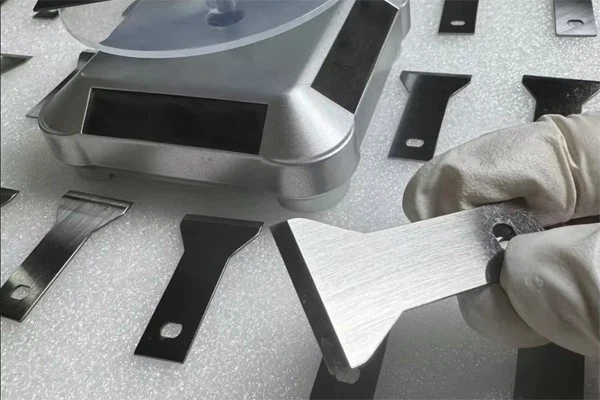
Die Face Cutters for Hot and Cold Face Systems
Die face cutters work directly at the face of the die. In hot face systems, molten plastic exits the die and the die face cutter blades trim pellets while in contact with the hot melt. In cold face or cooled face systems, the blades cut harder, cooled pellets. Both cases need flat, balanced blades that stay in close contact with the die without gouging it.
SHJ KNIFE focuses on edge stability and flatness for die face cutters. We keep tight tolerances on thickness and run-out, so the blade tracks smoothly across the die face. This gives you smooth pellet surfaces, fewer chips and less wear on the die plate.
Underwater Pelletizing Blades
In underwater pelletizing systems, the cutting chamber fills with water while pellets form and cool. Underwater pelletizing blades face a harsh mix of hot melt, high pressure and constant water flow. Blades must resist corrosion, stay balanced and keep their edge at temperature.
SHJ KNIFE selects steels and heat treatment that stand up to these conditions. Our underwater pelletizing blades keep a sharp edge for longer cycles and resist edge chipping when the system starts and stops. With stable blades, your line can stay on-spec with fewer adjustments and less noise.


Helical pelletizer blades and Special Profiles
Some pelletizing heads use helical pelletizer blades or special blade forms to spread the cutting load and reduce vibration. These profiles need precise geometry to avoid uneven cuts and to keep the blade tracking correctly across the die or roll.
SHJ KNIFE produces pelletiser blades with helical or custom profiles to match your head design. We work from drawings or samples to keep the cutting pattern and balance consistent, so high-speed pelletizing stays smooth and predictable.
Tool Steels and Carbide Grades for pelletizer blades
The wrong steel can turn a good pelletizing line into a constant maintenance job. Different resins, fillers and line speeds push pelletizer blades and die face cutters in very different ways. SHJ KNIFE offers several material options so you can match the blade to your process instead of forcing one grade into every job.
- D2 tool steel works well for many standard PP and PE compounds. It offers strong wear resistance and a reliable edge for general pelletizer blades.
- H13 hot-work steel suits hot die face systems and higher melt temperatures, such as PET and PVC lines. It keeps strength at temperature and resists thermal fatigue.
- High speed steel (HSS) helps when you run very high rpm and need longer time between blade changes. HSS holds a sharp edge even under high cutting speed.
- Carbide-tipped or solid carbide blades fit the most abrasive jobs, such as glass-filled or mineral-filled compounds. These
- pelletiser blades keep edge shape for long campaigns and cut fines and downtime, though they need careful handling.
| Material Grade | Typical Hardness (HRC) | Wear Resistance | Heat Resistance | Impact Toughness | Typical Use in Pelletizing |
|---|---|---|---|---|---|
| D2 Tool Steel | 58–60 | ★★★★☆ | ★★★☆☆ | ★★☆☆☆ | Standard PP/PE compounds |
| H13 Hot-Work Steel | 52–55 | ★★★☆☆ | ★★★★★ | ★★★★☆ | Hot die face, PET/PVC |
| HSS (High Speed Steel) | 60–62 | ★★★★☆ | ★★★★☆ | ★★★☆☆ | High-speed pelletizing lines |
| Carbide / Carbide-Tipped | ≈88–92 (HV) | ★★★★★ | ★★★★☆ | ★★☆☆☆ | Highly filled / abrasive compounds |
We can recommend a mix of D2, H13, HSS or carbide after you share your polymers, fillers and target blade life.
Dimensional Control and Surface Finish
Pellet quality depends on more than steel grade. Blade dimensions and surface finish also matter. A small error in thickness, flatness or edge angle can show up as noisy running or a wide pellet size distribution.
SHJ KNIFE holds tight tolerances on pelletizer blades and die face cutter blades. We control thickness, parallelism and edge geometry so the blades sit flat on the holder and track cleanly across the die or roll. Smooth surfaces reduce drag and make it easier to clean the head during changeover.
This level of control helps your team swap blades, restart the line and get back to on-spec pellets with less trial and error.
OEM-Compatible pelletizer blades for Leading Lines
Most customers already run established pelletizing lines. They do not want to redesign the head; they only want OEM-compatible pelletizer blades and die face cutters that fit and last.
SHJ KNIFE manufactures blades that match the critical dimensions of strand, water-ring and underwater systems from leading suppliers. We work from drawings, samples or measured data to align hole patterns, locating features and cutting diameter. In many cases, we can supply complete sets so you refresh all the knives in one planned stop.
Brand names sometimes mentioned in our communication serve only to indicate compatibility with typical pelletizing lines. SHJ KNIFE does not claim affiliation with original equipment manufacturers, and all trademarks remain the property of their respective owners.
FAQ – pelletizer blades and Die Face Cutters
Q1: How often should I change pelletizer blades?
There is no single interval, because resin type, fillers and line speed all matter. Many plants track pellet quality and motor load, then schedule pelletizer knife changes based on running hours and visual inspection of the edge, rather than waiting for a failure.
Q2: What is the difference between pelletizer blades and die face cutters?
pelletizer blades usually cut cooled strands or pellets against a roll or ring. Die face cutters sit directly at the die and trim pellets as they leave the die face. Both control pellet length, but their geometry and mounting methods differ.
Q3: When should I choose D2, H13, HSS or carbide?
D2 works well for many standard compounds. H13 suits higher melt temperatures and hot die face systems. HSS fits very high speed lines where edge life is critical. Carbide helps for highly filled or abrasive materials. SHJ KNIFE can suggest a grade once you share your resin list and target cycle length.
Q4: How do I know my die face cutters are worn out?
Signs include growing fines, more tails, noisy running, a rise in motor load or visible rounding and chipping on the edge. Regular checks of die face cutter blades and simple log sheets often help maintenance teams change blades before pellet quality drops too far.
Q5: Can you produce OEM replacement pelletizer blades without original drawings?
Yes. If you send used pelletizer blades or die face cutters, we can measure them, rebuild the original geometry and supply new blades that fit your pelletizing head. This helps when the line is old, documentation is missing or the original supplier no longer supports that model.
Hot Tags: Pelletizer blades,plastic granulator knives, crusher knives, crusher blades, granulator rotor and bed knives
You Might Also Like


Send Inquiry
