

4 Key Factors Affecting Your Industrial Machine Knife Choice
Introduction
Choosing the right industrial machine knife can be overwhelming. With so many material options available-GDP-189, CPM-M4, D2, VG-10, and more-how do you make the right choice for your needs? The material you choose not only affects the price but also directly impacts the knife's durability, cutting efficiency, and overall performance.
After nearly 30 years in the industry, we've seen countless customers facing similar challenges. Common questions include:
- "What makes an industrial knife durable and long-lasting?"
- "Why do my industrial knives wear out quickly?"
- "How can I prevent corrosion on my industrial blades?"
- "How do I maintain the sharpness of my industrial knives?"
These questions all point to four key factors: hardness, wear resistance, corrosion resistance, and edge retention. Understanding these will help you make the right material choice based on your specific needs.
Navigating Knife Material Selection: Key Performance Factors
Each of these four factors plays a vital role in how your blade performs. Whether you're cutting tough metals, working in high-moisture environments, or dealing with high-demand production schedules, these factors will determine your knife's performance and longevity.
Let's dive into each factor, starting with hardness, the foundation of blade performance. We'll then explore wear resistance and how it influences blade lifespan, followed by corrosion resistance for blades exposed to harsh environments. Finally, we'll cover edge retention, which helps keep your knife sharp for longer periods.
By the end, you'll have a clearer understanding of how each factor impacts performance and how to choose the right material for your application.
1. Knife Hardness: The Foundation of Blade Performance
What is Hardness and Why It Matters

Hardness refers to the resistance of a material to deformation, particularly permanent deformation like scratching or denting. In the context of industrial machine knives, hardness directly impacts the blade's ability to maintain its cutting edge and withstand heavy-duty use. Knife hardness is typically measured using the Rockwell C scale (HRC), where higher numbers indicate harder materials.
When selecting industrial knives, the hardness of the material is essential for tasks that require precise cuts and durability. For example, industries such as metalworking often demand knives with high hardness to handle tough materials without compromising on performance. The relationship between hardness and performance is straightforward-materials with higher hardness typically provide better edge retention and are more resistant to wear.

Choosing the Right Hardness for Your Application
However, hardness isn't always the ultimate factor for every application. While harder materials tend to hold their edge longer, they may also become more brittle, which means they could crack or break under certain conditions. On the other hand, materials with slightly lower hardness might be more flexible and resilient but may require more frequent sharpening. Therefore, your application will determine whether a harder material is more suitable, or if a balance of hardness and toughness is needed.
In the hardness performance chart we've included, you'll notice that materials like high-carbon steel and tool steels generally rank high for hardness. These materials excel in applications requiring precision cutting, such as cutting metals or plastics. However, softer materials like stainless steel might be more appropriate in environments where flexibility and corrosion resistance are prioritized.
2. Wear Resistance: Extending the Lifespan of Your Blade
Understanding Wear Resistance

Wear resistance refers to a material's ability to resist abrasion and erosion over time. For industrial knives, wear resistance is crucial because it determines how long the blade can perform effectively without losing its sharpness or becoming damaged. Industrial blades face constant friction when cutting through materials, and this friction leads to wear.
The wear resistance of a knife is affected by both the material's hardness and its chemical composition. For instance, knives made from tool steels often exhibit superior wear resistance because they are designed to withstand the stresses of industrial cutting.

How to Choose Wear-Resistant Knives
When you examine different materials in the wear resistance chart, you'll see a variety of options suited for different applications. For example, high-speed steel (HSS) and carbide-tipped blades are commonly used in industries like woodworking and metalworking, where materials are tough and abrasive.
Choosing the right knife material for wear resistance depends largely on your cutting environment. If you're working with abrasive materials like concrete, stone, or certain metals, a high wear resistance material such as carbide or HSS will significantly extend the lifespan of your industrial knives.
3. Corrosion Resistance: Protecting Your Blade in Harsh Environments
Why Corrosion Resistance is Critical

Corrosion resistance refers to a material's ability to resist degradation when exposed to moisture, chemicals, or other corrosive substances. In industries where knives are exposed to high humidity, saltwater, or chemicals, corrosion resistance becomes a key factor in the performance of your industrial blades.
For instance, in food processing, the knives often come into contact with moisture, oils, and cleaning agents. In these cases, knives made from corrosion-resistant materials like stainless steel are preferred, as they maintain their structural integrity and sharpness despite the challenging conditions.

Choosing Corrosion-Resistant Materials
In the corrosion resistance chart, materials like stainless steel and certain alloys tend to rank higher for their ability to resist rust and corrosion. However, some stainless steel grades perform better than others depending on the amount of chromium and nickel present. For example, 440C stainless steel is a popular choice for industrial knives due to its excellent corrosion resistance, but other alloys like 420 or 304 may also be considered based on the level of exposure to corrosive elements.
When selecting corrosion-resistant knives, it's essential to consider the specific environmental factors your knives will face. If your knives are exposed to harsh chemicals or high moisture levels, opting for materials with superior corrosion resistance will help preserve the blade's performance and extend its service life.
4. Edge Retention: Keeping Your Blade Sharp Over Time
What is Edge Retention?

Edge retention refers to the ability of a knife to maintain its sharpness during use. In high-demand environments where knives need to retain their cutting performance over long periods, edge retention is a critical factor. Knives with excellent edge retention require less frequent sharpening and continue to perform consistently in high-volume cutting tasks.
Materials like high-carbon steels, tool steels, and certain high-performance alloys are known for their ability to maintain a sharp edge for longer periods. This makes them ideal for industries where precision cuts and longevity are essential, such as in packaging, textile manufacturing, and automotive industries.
Choosing Materials for Superior Edge Retention
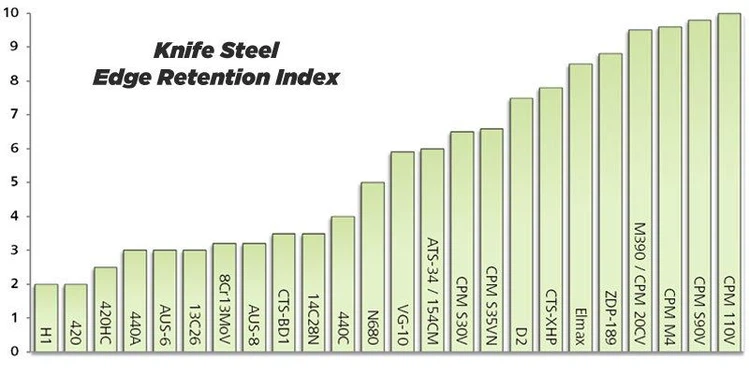
In the edge retention chart, you will notice that hard, high-carbon materials generally outperform softer materials in terms of holding an edge. However, while hardness contributes to edge retention, other factors like material toughness and wear resistance also play a role. Materials like vanadium steel and high-speed steels (HSS) are often chosen for their excellent edge retention, especially when paired with the right level of hardness.
5. How to Link Materials to Your Industrial Knife Needs
Making the Right Choice Based on Your Performance Requirements
When it comes to selecting the right industrial machine knife, balancing the four key factors-hardness, wear resistance, corrosion resistance, and edge retention-is essential. Your choice will depend largely on the specific demands of your operation. For example, if you're working in an environment where durability and wear resistance are essential, opting for materials like HSS or carbide might be the best option. If corrosion resistance is more important due to exposure to moisture or chemicals, stainless steel will be your go-to choice.
Use the information provided in the material performance charts to understand how different materials align with your needs. By comparing materials based on their performance in these four key areas, you can confidently select the best blade for your specific application.
Conclusion: Finding the Right Knife Material for Your Application
Selecting the right material for your industrial machine knives can be a daunting task, but understanding the relationship between material properties and performance will make the decision-making process much clearer. Whether you need a blade that excels in hardness, wear resistance, corrosion resistance, or edge retention, understanding these characteristics will guide you toward the right material for your needs.
Don't hesitate to contact SHJ KNIFE for expert advice and personalized recommendations based on your unique requirements. With our extensive range of industrial knives, we can help you choose the right tool to maximize your performance and productivity.


