


How to Set Up Slitter Blades Right: Gap & Pressure for Film, Paper, Foil
Introduction
Installing slitter blades is not difficult, but installing them correctly is what determines whether a line delivers clean edges, stable running, and acceptable blade life.
In practice, many slitting issues are not caused by the machine alone. Poor blade seating, unsuitable blade geometry, excessive contact, unstable holder alignment, or incorrect setup for the material can all lead to dust, fuzzy edges, delamination, stretching, or premature wear.
This guide explains the common installation and adjustment logic used in most industrial slitting applications, including film, paper, foil, laminates, and nonwovens. The exact holder design, overlap, side clearance, pressure setting, or torque requirement may vary by machine builder, but the underlying setup logic is usually consistent. For most converting operations, the process comes down to four steps:
- identify the slitting method;
- mount the blade correctly;
- set the correct gap or pressure;
- verify the result at production conditions.
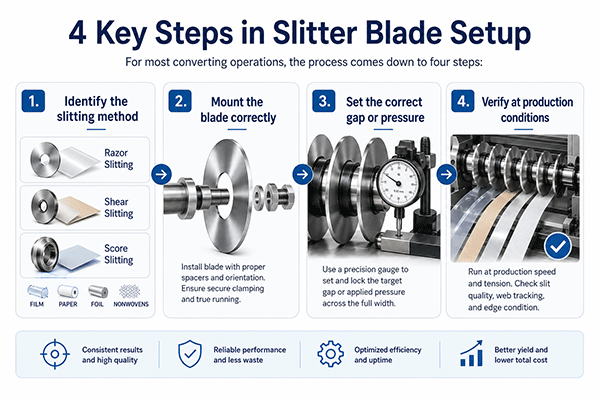
1. Identify how the slitter cuts
Before any blade installation or adjustment, confirm the cutting method. This determines which settings matter most and which problems are most likely to appear.
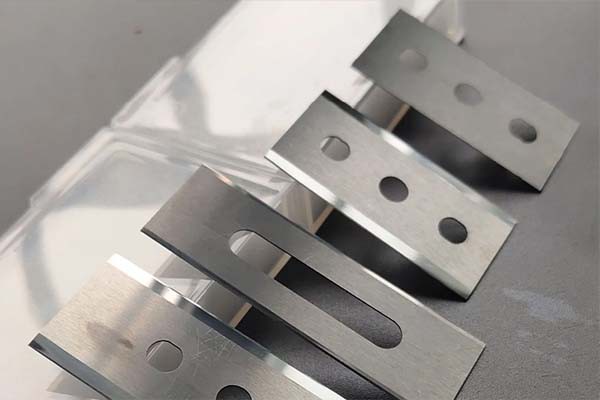
- Razor slitting – A stationary razor cuts the moving web. It is widely used for thin films and other lightweight materials where a simple and economical cutting method is sufficient.
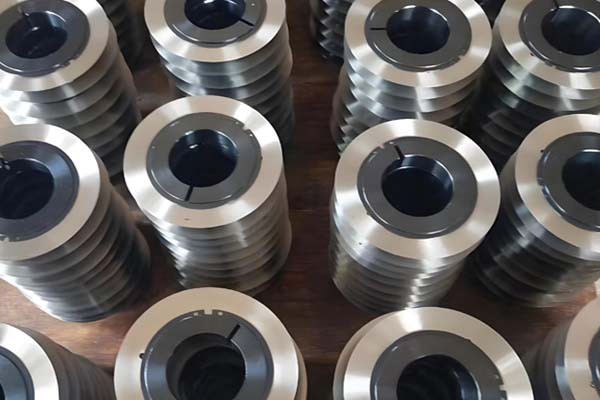
- Shear slitting – Upper and lower circular knives cut like a rotating pair of scissors. This method is common where edge quality, dimensional control, and blade life are more important.
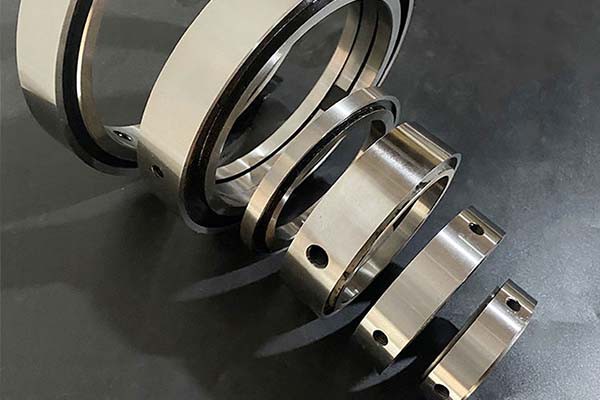
- Score or crush slitting – A circular knife presses the material against an anvil roll. This method is often used for nonwovens, soft webs, and other applications where high speed and simple setup are priorities.
If the cutting method is misidentified, even a well-made blade can produce poor results because the wrong setup logic will be applied.
2. Lockout, inspection, and cleanup before installation
Before handling any blade, isolate the machine completely and confirm that all rotating parts have stopped. Use the required lockout procedure for your site.
Wear cut-resistant gloves and eye protection. Blade edges, burrs, and contaminated spacers are common causes of injury during maintenance and setup.
Then inspect and clean the following surfaces:
- shaft and seating area;
- blade bore;
- spacers and lock nuts;
- holder contact surfaces.
Residue, adhesive, dust, or corrosion at any of these points can affect blade seating and cause runout, chatter, inconsistent gap, or poor edge finish.
Do not install a blade that shows chips, visible edge damage, cracks, or corrosion.
3. How to install circular slitter blades
The steps below apply primarily to circular knives used in shear slitting and many score slitting systems.
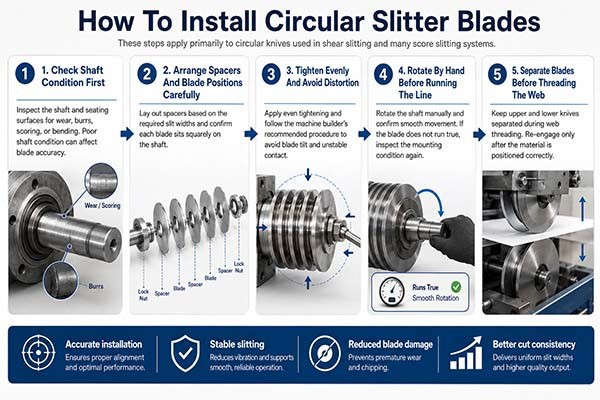
Check shaft condition first
A blade will only run as accurately as the shaft and seating surfaces allow. Inspect the shaft for wear, burrs, scoring, or bending. If the shaft condition is poor, blade replacement alone will not solve the problem.
Arrange spacers and blade positions carefully
Lay out spacers based on the required slit widths and confirm the blade position before tightening. Each blade should sit squarely on the shaft without rocking or tilt.
Tighten evenly and avoid distortion
Apply even tightening and follow the machine builder's recommended procedure where available. Uneven tightening can create blade tilt, unstable contact, and inconsistent slit quality across the width.
Rotate by hand before running the line
After installation, rotate the shaft manually and confirm that the movement is smooth. If the blade does not run true, remove it and inspect the mounting condition before proceeding.
Separate blades before threading the web
Where applicable, keep upper and lower knives separated during web threading. Re-engage them only after the material is correctly positioned. This reduces unnecessary knife contact and lowers the risk of damaging the web or the blade edge.
Engineering note: If a blade appears unstable after mounting, do not adjust around the problem. First confirm shaft condition, spacer cleanliness, blade seating, holder alignment, and tightening sequence.
4. Razor blade holder setup
Razor systems are mechanically simpler, but the blade still needs to be positioned with control and consistency.
- Confirm the cartridge or blade is fully seated in the holder.
- Set blade overhang conservatively. Excessive overhang can reduce stability and accelerate wear.
- Check the holder angle and position relative to the web path.
- Replace disposable blades before edge quality deteriorates enough to create scrap.
Thin film applications are often sensitive to friction, angle, and edge sharpness. If the edge begins to stretch, neck in, or show heat-related distortion, check the blade condition and holder setup first.
5. Adjusting gap, side clearance, or pressure
In many slitting operations, the most important adjustment is not the blade itself but the relationship between the blades.
For shear slitting systems, operators may refer to gap, side clearance, overlap, or knife engagement depending on the equipment design. Regardless of terminology, the principle is consistent:
- too much contact increases heat, wear, and dust;
- too little contact reduces cut quality and edge control.
For score slitting systems, the critical variable is often pressure rather than a measured gap. Excessive pressure can crush or distort the material, while insufficient pressure may leave incomplete separation.
Any starting value should be treated as a process baseline, not a fixed rule. Material thickness, hardness, line speed, edge geometry, and holder condition all influence the final setting.
6. Practical starting points by material
The table below gives practical starting points for setup. These values should always be verified on the actual line.
| Material | Common slitting method | Typical starting point | Primary setup concern |
|---|---|---|---|
| Thin films (PE, PP, BOPP, PET) | Razor / Shear | In shear slitting, many lines begin around 110–150% of material thickness | Heat build-up, edge stretching, friction, angle suitability |
| Paper and paperboard | Shear | Many lines begin around 50–100% of thickness, depending on cut quality target | Dust control, edge finish, blade stability |
| Foil | Shear | Many lines begin around 80–120% of thickness | Powder reduction, edge integrity, stable engagement |
| Laminates | Shear | Many lines begin near 90–100% of thickness | Delamination prevention, sharpness, controlled contact |
| Nonwovens | Score / Crush / Shear | Pressure-led setup is common; start low and increase gradually | Crushing control, edge cleanliness, web distortion |
Where setup consistency matters, it is good practice to record the final successful condition for each material and job combination. This often reduces changeover time more effectively than repeated trial and error.
7. Matching blade geometry to the application
Blade performance depends not only on installation but also on whether the blade design is appropriate for the application.
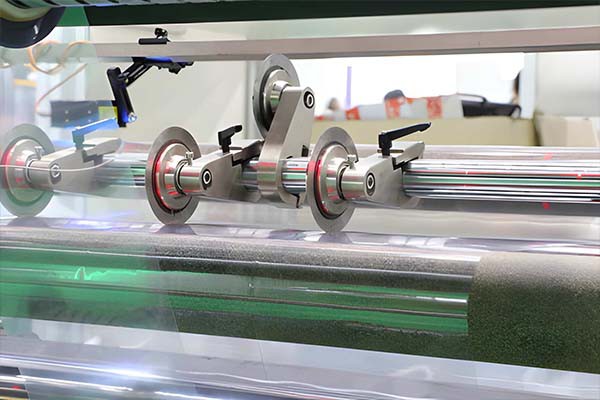
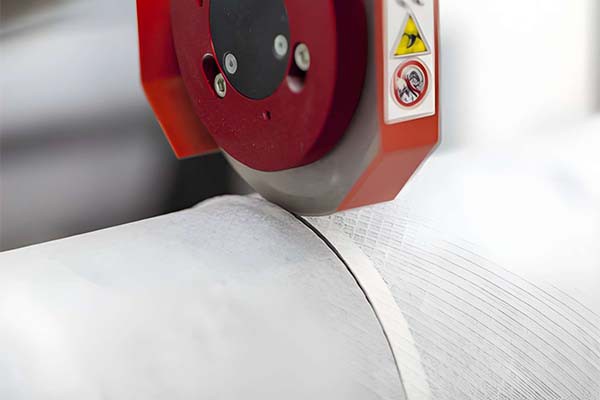
Films – Often require sharp, low-friction cutting edges and good surface finish to reduce stringing and edge distortion.
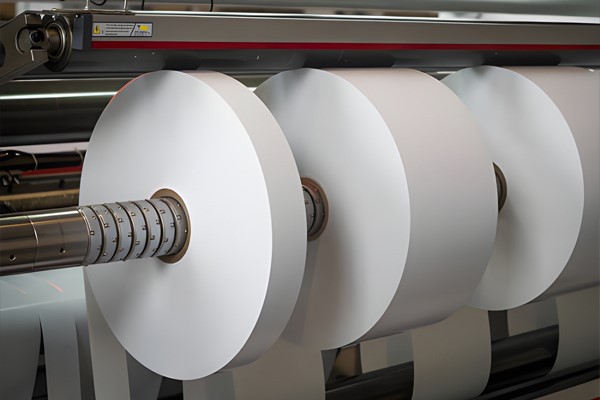
Paper and tissue – Usually need a balanced combination of sharpness and toughness, especially where dust and fibre control matter.
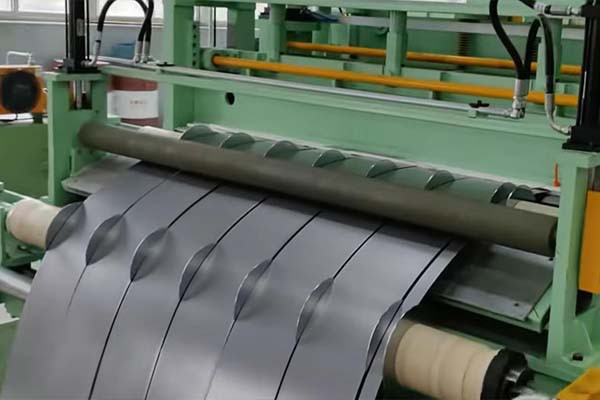
Foil – Often benefits from stronger edge support and stable geometry to maintain edge integrity and reduce powder generation.
Nonwovens – May require edge forms that improve grip and separation, depending on web softness, loft, and structure.
For procurement teams, the most useful supplier is usually the one that can explain why a blade material, coating, edge form, or hardness range makes sense for the application – not just provide a drawing match.
8. Validate the setup before full production
A correct-looking setup is not the same as a production-proven setup. Validation should be done in stages.
Slow-speed sample check
Run the line slowly and inspect the first cut sample for edge quality, dust, stretching, or visible instability.
Production-condition check
Then move toward production speed. Heat, vibration, and tension behaviour can change the final result even when the slow-speed sample looks acceptable.
Record the successful condition
For repeat jobs, record the material, thickness, line speed, slit width, blade type, and final successful setting. This creates a more stable purchasing and maintenance process over time.
9. Troubleshooting common slitting problems
| Problem | Likely cause | First check |
|---|---|---|
| Fuzzy or rough edge | Blade wear, excessive gap, loose holder | Blade condition, holder stability, gap setting |
| Chipped or irregular edge | Excessive contact, unsuitable blade grade | Knife engagement, material match, blade toughness |
| Dust or powder | Crushing effect, unstable edge, too much contact | Gap, sharpness, extraction or air support |
| Laminate delamination | Insufficient edge quality or unsuitable setup | Blade sharpness, contact condition, material response |
| Film stretching or neck-in | Excess friction, unsuitable blade angle, high tension | Tension setting, blade angle, holder alignment |
| Fast blade wear | Too much contact, unsuitable blade material, unstable running | Setup condition first, then blade grade or coating |
10. What procurement teams should confirm before ordering slitter blades
For engineering and procurement teams, blade purchasing should not be based on diameter and thickness alone. A practical supplier should be able to confirm the application context behind the drawing.
- material type and thickness range;
- slitting method and machine type;
- line speed and slit width;
- current cutting issue, if any;
- whether special blade material, coating, or edge form may be required;
- whether balance-related inspection or closer dimensional control is needed for high-speed lines.
At SHJ KNIFE, we support slitter blade applications across film, paper, foil, laminate, and nonwoven converting. If needed, we can review application details first and recommend a more suitable starting point for blade material, edge form, and setup direction.
To request a useful review, send:
- material and thickness;
- blade size or drawing;
- machine type and slitting method;
- line speed and slit width;
- the specific issue you want to solve.
FAQ
Are slitter blade installation steps universal?
The setup logic is broadly similar across many industrial slitters, but the exact settings are not universal. Blade position, contact condition, and validation method are common principles; the final values depend on the machine and the material.
Can one article cover film, paper, foil, and nonwovens?
Yes, as long as it explains the common setup logic and clearly separates application-specific adjustments. A useful guide should provide starting points, not imply that one fixed setting works for every line.
Is the correct blade chosen by size alone?
No. Size is essential, but material, line speed, slitting method, edge requirement, and blade life target also affect whether the blade is suitable.
What causes fast blade wear most often?
In many cases, wear is accelerated by setup condition rather than by hardness alone. Excessive contact, unstable running, unsuitable blade geometry, or the wrong blade material can all shorten service life.
Conclusion
Successful slitter blade setup is not about applying one fixed number across every machine. It is about understanding the cutting method, mounting the blade correctly, adjusting the contact condition for the material, and validating the result under real running conditions.
For procurement and engineering teams, the most reliable slitter blade solution is usually the one that combines correct dimensions with the right blade material, edge form, and setup logic for the application.
If you would like a practical recommendation, send us your blade drawing or size, material, thickness, line speed, and current cutting issue.
Contact SHJ KNIFE to discuss the application or request a quotation.
No Information


